


Introduction
Claudia Kleinert Schlaganfall has become increasingly popular in search engines, leading many people to wonder whether the well-known German weather presenter has experienced a stroke. Health-related searches involving public figures often spread rapidly, especially when speculation begins circulating online. Unfortunately, not every trending search reflects reality.
When it comes to medical topics, accuracy is essential. A stroke is a serious medical emergency, and false information about someone’s health can create unnecessary concern among fans and readers. Before believing or sharing such claims, it is important to rely on verified facts instead of online rumors.
This article explores why the phrase “Claudia Kleinert Schlaganfall” has gained attention, what is actually known, how misinformation spreads, and why responsible reporting matters when discussing the health of public personalities.
Who Is claudia kleinert schlaganfall?
claudia kleinert schlaganfall is one of Germany’s most recognizable television weather presenters. Over the years, she has built a reputation for delivering weather forecasts with professionalism, confidence, and a calm on-screen presence. Her long career has made her a familiar face for millions of viewers.
Beyond television, she has also worked as a keynote speaker, author, and public personality, participating in various events and social initiatives. Her communication skills and experience have helped establish her as a respected figure in German media.
Because of her public visibility, people naturally become interested in both her professional achievements and her personal life. This level of curiosity is common for television personalities who have remained in the spotlight for many years.
Did claudia kleinert schlaganfall Have a Stroke?
One of the most important facts to understand is that there is no officially confirmed information indicating that claudia kleinert schlaganfall has suffered a stroke. Neither claudia kleinert schlaganfall herself nor major reputable news organizations have announced or confirmed such a medical event. The widespread search term appears to be driven primarily by online speculation rather than verified reporting.
Many websites have published articles discussing the keyword because it generates significant search traffic. However, these articles generally conclude that there is no reliable evidence supporting the claim. Instead, they explain that the search trend has grown because people continue looking for answers to an unverified rumor.
This distinction is extremely important. Searching for a topic does not automatically mean the underlying claim is true. In many cases, search trends simply reflect public curiosity rather than factual events.
Why Did the Rumor Spread?
Rumors involving celebrities often begin for surprisingly simple reasons. A television appearance that looks different, a temporary absence from broadcasting, or even misleading social media posts can trigger widespread speculation.
Search engine algorithms also contribute to this phenomenon. As more users search for phrases like “Claudia Kleinert Schlaganfall,” those keywords become increasingly visible to other users. This creates a cycle where curiosity alone keeps the search trend alive, even without verified information.
Another contributing factor is clickbait content. Some websites use dramatic headlines to attract visitors, knowing that health-related stories about well-known personalities often generate significant traffic. Readers who only glance at headlines may mistakenly assume the information has been confirmed.
The Importance of Verifying Health News
Health information deserves a higher standard of accuracy than ordinary entertainment news. False reports about illnesses can damage reputations, worry families, and mislead the public.
Whenever you encounter claims about a celebrity’s medical condition, it is wise to check whether the information comes from official statements, respected news organizations, or verified interviews. Anonymous blogs or sensational headlines should never be treated as reliable evidence.
Critical thinking is especially valuable in today’s digital world. The speed at which information spreads online often exceeds the speed at which facts can be verified. Taking a few moments to confirm a story helps prevent misinformation from spreading even further.
Understanding What a Stroke Really Is
Although there is no confirmed evidence linking claudia kleinert schlaganfall to a stroke, the topic provides an opportunity to better understand this serious medical condition.
A stroke occurs when blood flow to part of the brain is interrupted or when a blood vessel in the brain ruptures. Without adequate oxygen, brain cells begin to die within minutes, making immediate medical treatment essential.
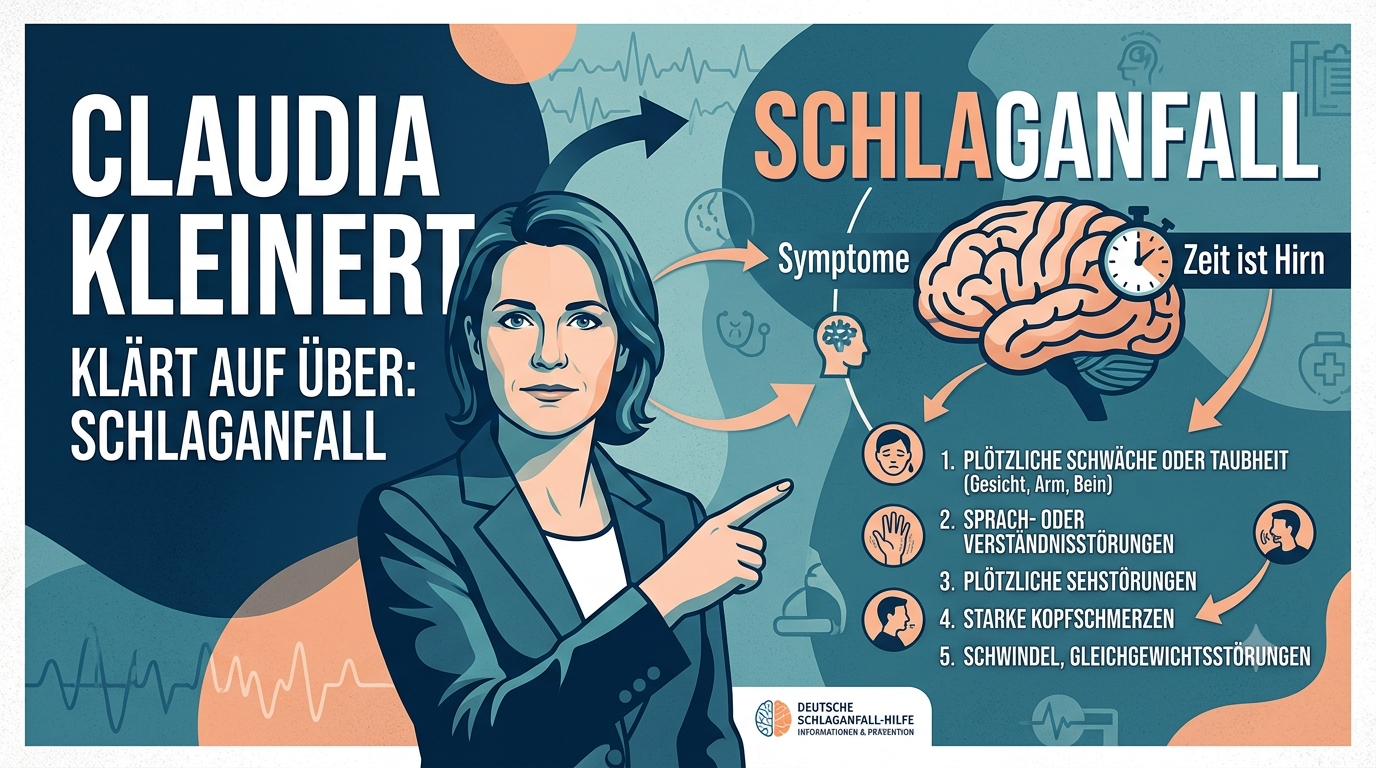
Common warning signs include sudden weakness on one side of the body, difficulty speaking, confusion, vision problems, dizziness, loss of balance, or a severe headache with no obvious cause. Anyone experiencing these symptoms should receive emergency medical attention immediately.
Doctors often encourage people to remember the FAST method:
- F – Face: Is one side of the face drooping?
- A – Arms: Can the person raise both arms evenly?
- S – Speech: Is speech slurred or difficult to understand?
- T – Time: Call emergency services immediately if these symptoms appear.
Early treatment greatly improves the chances of recovery and reduces the risk of long-term disability.
How Public Figures Deal with Health Speculation
Celebrities, journalists, and television presenters frequently become subjects of online speculation. Sometimes these rumors involve relationships, financial matters, or health concerns.
Many public figures choose not to respond to every rumor because doing so can unintentionally attract even more attention. Instead, they continue focusing on their professional responsibilities while allowing verified information to speak for itself.
This approach helps maintain privacy and prevents unnecessary media attention from dominating their careers. In claudia kleinert schlaganfall case, there has been no official confirmation supporting the stroke rumor, making responsible reporting especially important.
The Role of Social Media in Spreading Misinformation
Social media platforms have transformed how information reaches the public. News can spread across millions of users within minutes, regardless of whether it is accurate.
Unfortunately, emotionally charged topics often receive the highest engagement. Stories involving serious illnesses naturally attract attention because people care about public personalities they have watched for years.
However, increased visibility does not equal credibility. A post that receives thousands of shares may still be completely false. Responsible readers should evaluate the original source before accepting health-related claims as factual.
Media literacy has become one of the most valuable skills in the digital age. Understanding how misinformation spreads helps individuals make better decisions about the content they consume and share.
Why Privacy Should Be Respected
Even though public figures live much of their lives in front of audiences, they still deserve personal privacy regarding medical matters. Unless someone chooses to publicly discuss a health condition, speculation should be treated carefully.
Medical information is deeply personal. Sharing or repeating unverified claims can cause unnecessary stress not only for the individual involved but also for family members, colleagues, and supporters.
Respecting privacy does not mean ignoring public interest. Instead, it means ensuring that discussions are based on confirmed facts rather than assumptions.
Responsible journalism follows this principle by reporting only information that has been verified through credible sources.
What Readers Can Learn from This Situation
The popularity of the search term “Claudia Kleinert Schlaganfall” demonstrates how easily internet rumors can gain momentum. A simple search trend can eventually appear more significant than the actual evidence behind it.
Readers should develop the habit of questioning sensational headlines, checking multiple reliable sources, and distinguishing between speculation and verified reporting. These practices improve the quality of information consumed online and reduce the spread of misinformation.
The situation also highlights the importance of discussing health issues responsibly. While strokes are serious medical emergencies that deserve awareness, associating someone with such a condition without evidence is unfair and potentially harmful.
Conclusion
The keyword “Claudia Kleinert Schlaganfall” has generated widespread online attention, but the available evidence tells a clear story. There is currently no officially confirmed information that claudia kleinert schlaganfall has suffered a stroke. The topic appears to have gained popularity largely because of internet speculation, search trends, and click-driven content rather than verified medical reports.
This example reminds us that search popularity should never be confused with factual accuracy. Before accepting health-related claims about any public figure, it is essential to rely on trustworthy sources and official statements.
Ultimately, claudia kleinert schlaganfall continues to be recognized for her successful broadcasting career and professional achievements. Rather than focusing on unverified rumors, readers can better appreciate her contributions to television while also using this opportunity to learn more about stroke awareness, responsible journalism, and the importance of verifying information before sharing it.